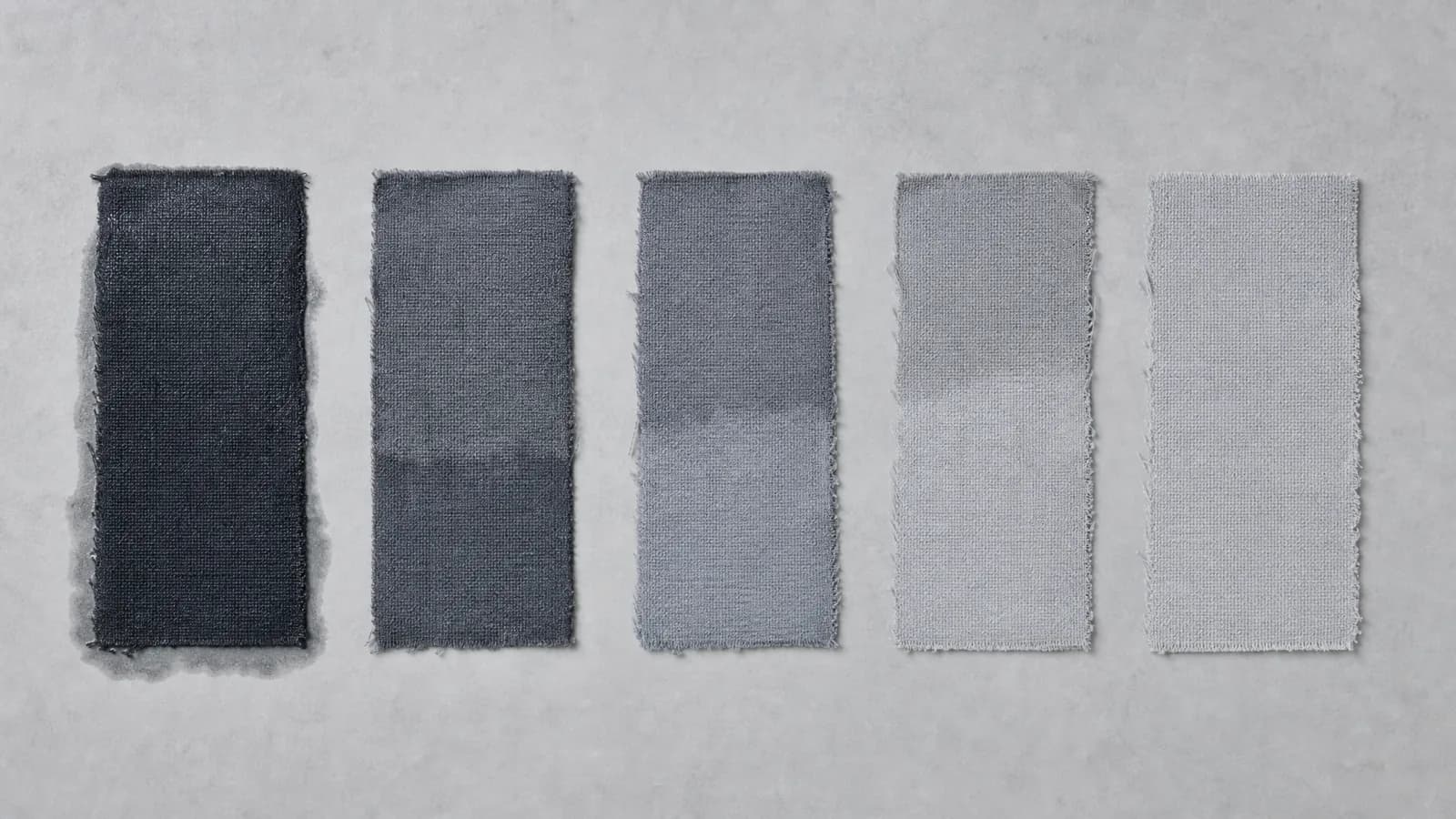
Stage 010–4 min
Saturated
Cold against the skin and visibly darker than the rest of the garment. Nothing about this stage is subtle.
01 — The question
A spec sheet says breathable, quick-dry, moisture-wicking. None of those words tell you what happens. Two things decide your experience: where the sweat collects and how long after you stop before the garment is wearable again. Sweatline turns both into something you can look at.
Nothing above is stored and nothing needs an account. Drag the scale and watch the map change.
Zone map · flat-laid garment
Moderate — Commuting pace, a bag or a bike, some effort
Zones · intensity of 3
Saturated · 0–12 min
Cold against the skin and visibly darker than the rest of the garment. Nothing about this stage is subtle.
02 — Three steps, no account required for the first two
01
One line: the activity, roughly how long, and where you go straight afterwards. That last part is the one most tools ignore, and it is the part that decides whether the answer matters.
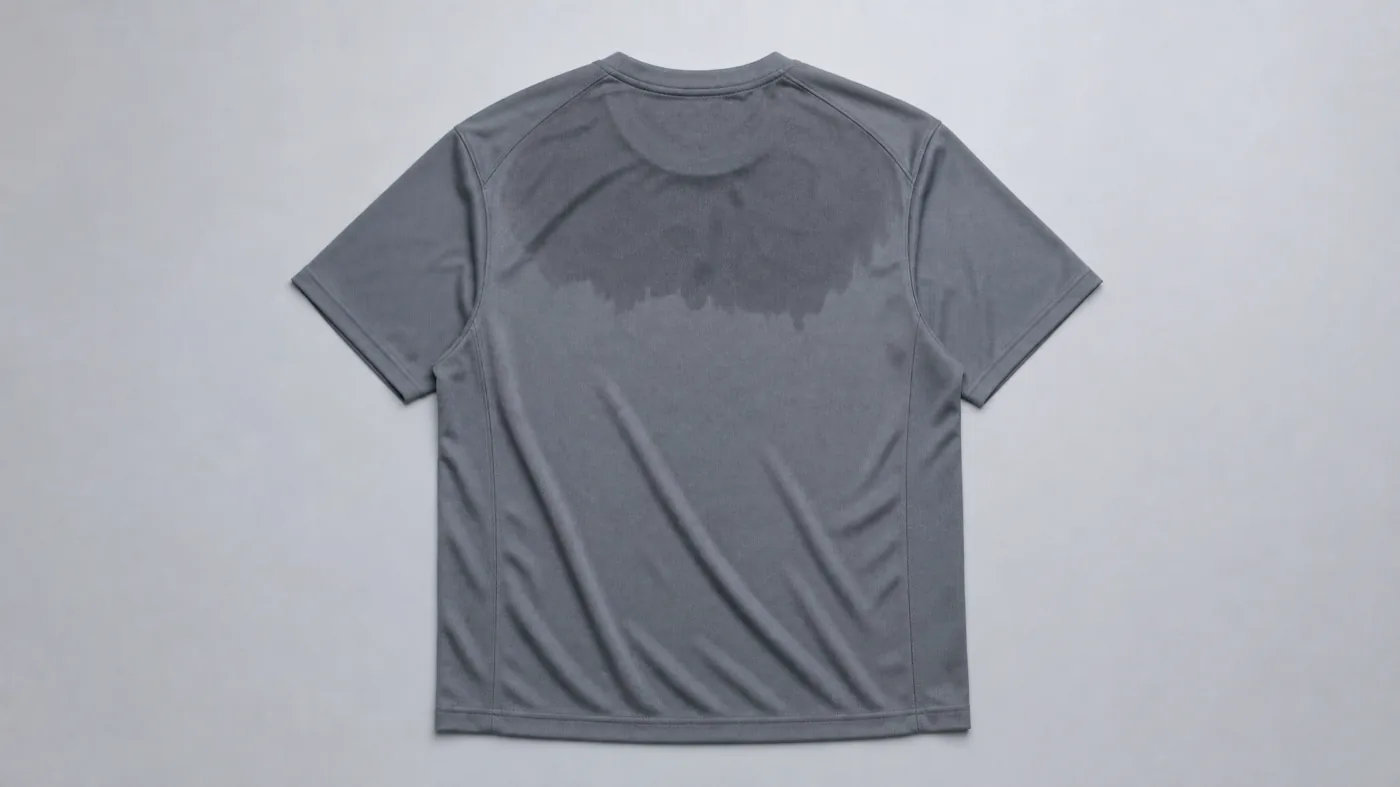
02
A flat-laid garment with the high-sweat areas marked at three intensities. Optionally upload a flat-lay photo and the fabric is read from the weave, which sharpens the drying estimate.
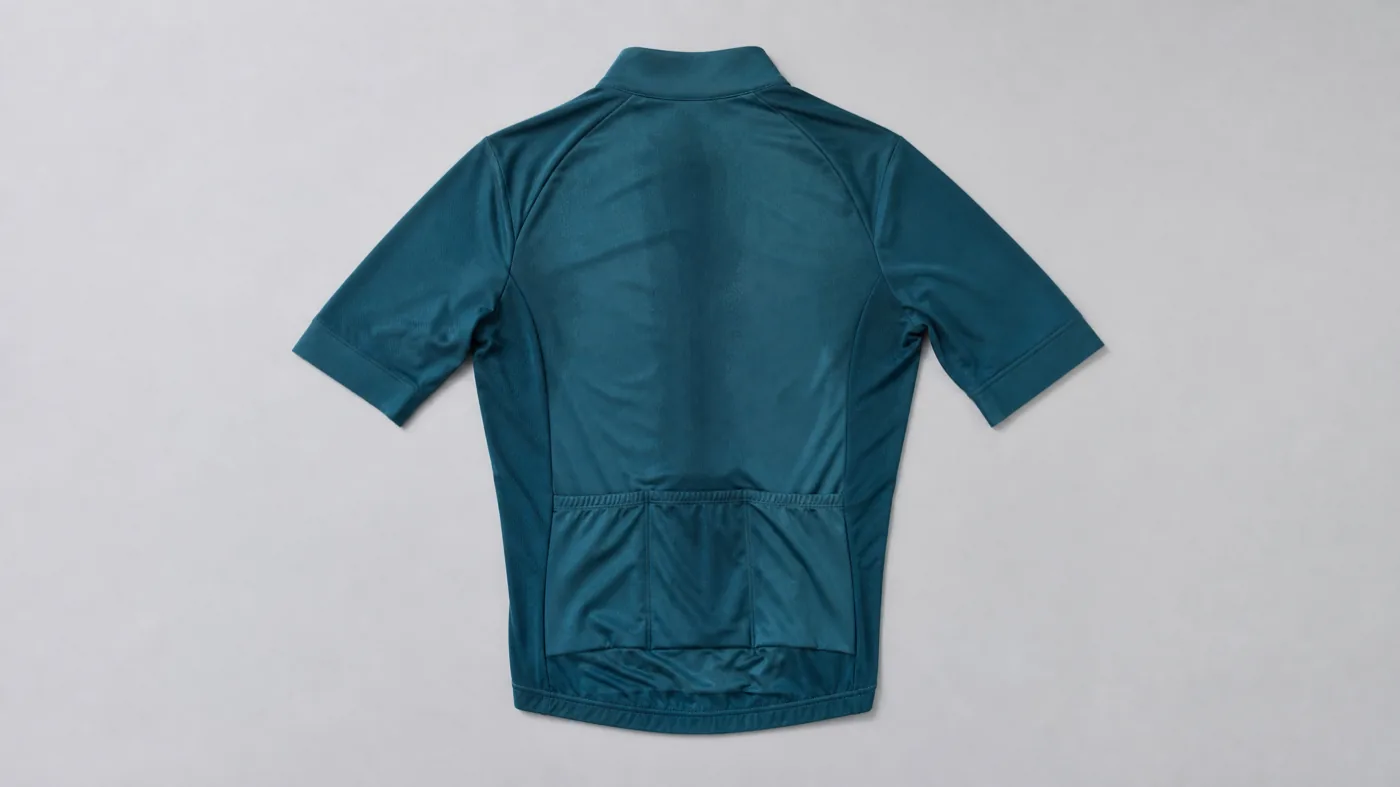
03
The drying process as a sequence of stages, each a time range with a description of what wearing it feels like at that point. The time scale is drawn in the browser, never generated.
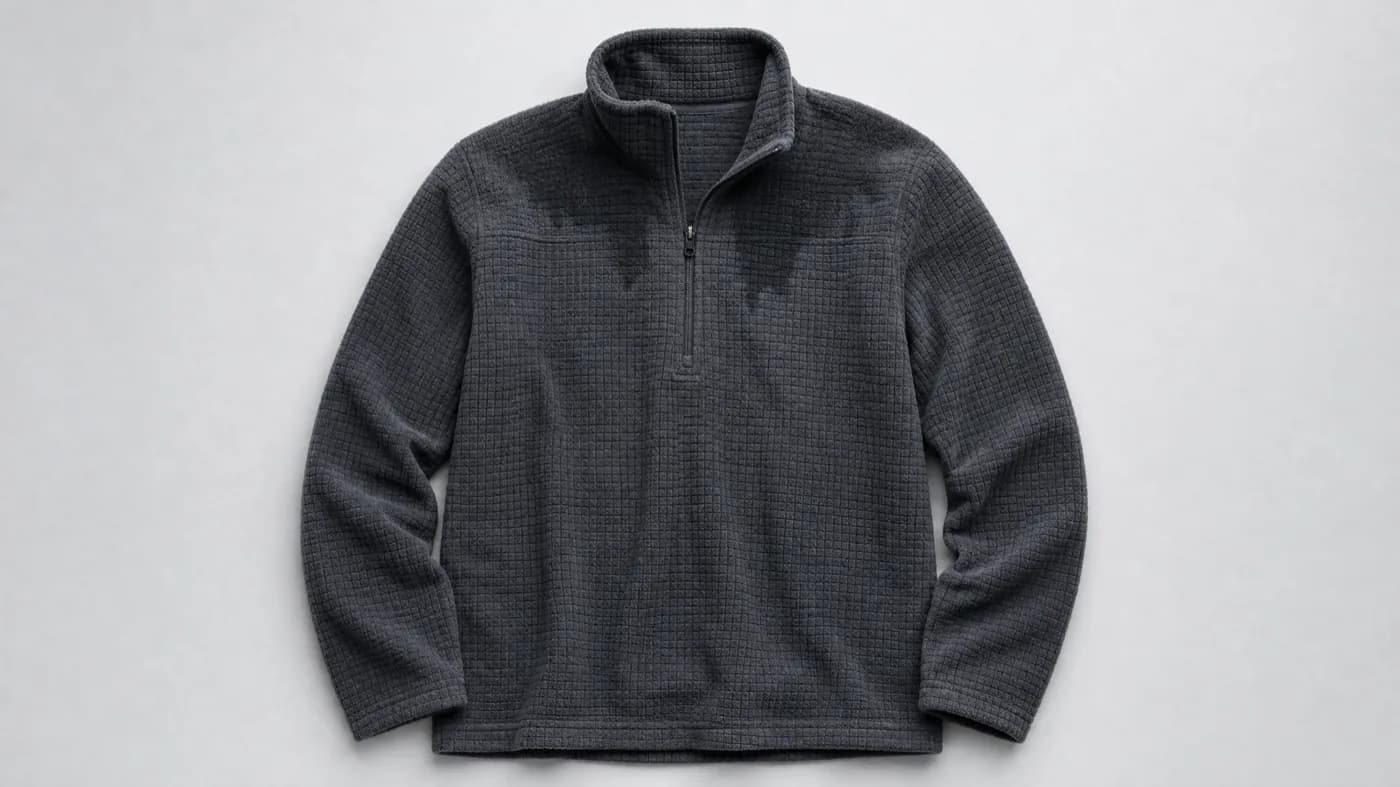
03 — Zones and process, same screen
Where it gets wet and how long it stays that way are one question, not two. Scroll the stages on the right and watch the same garment dry on the left.
Back view
0–4 min
Moderate — Commuting pace, a bag or a bike, some effort
Cold against the skin and visibly darker than the rest of the garment. Nothing about this stage is subtle.
The patch has stopped spreading but still transfers moisture to anything it touches — a chair back, a bag strap.
Wearable if you are moving. The outline is still readable at close range and in direct light.
No longer cold, no longer transferring. A faint tonal difference may remain where the patch was.
The garment reads as one tone again. Nothing left to notice.
What this site cannot know
Every stage above is a range under the conditions you described, not a promise. There is no minute at which a garment is guaranteed to be dry.
04 — What the fabric changes
Structure decides where a patch goes and how long it stays. A filament knit spreads moisture wide and shallow. Poplin holds it in the fibre with a hard edge. Fleece reads dry on the surface long before the layer under it is. Upload a flat-lay photo and the structure is read from the weave rather than guessed from your wording.
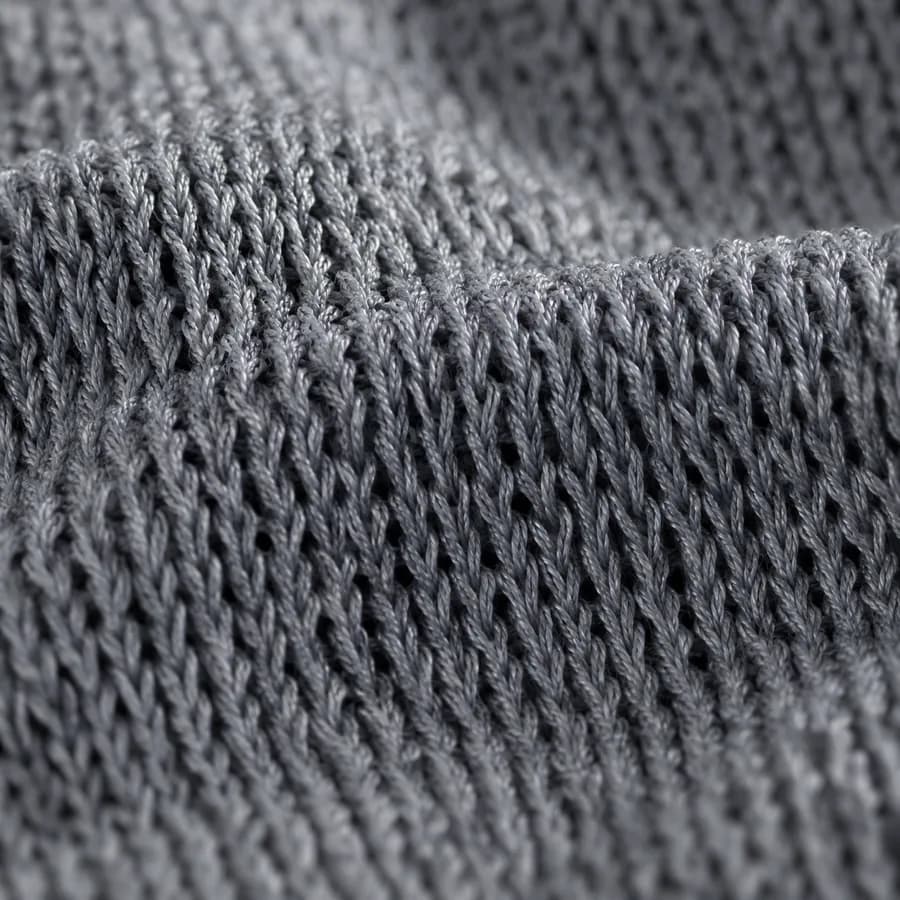
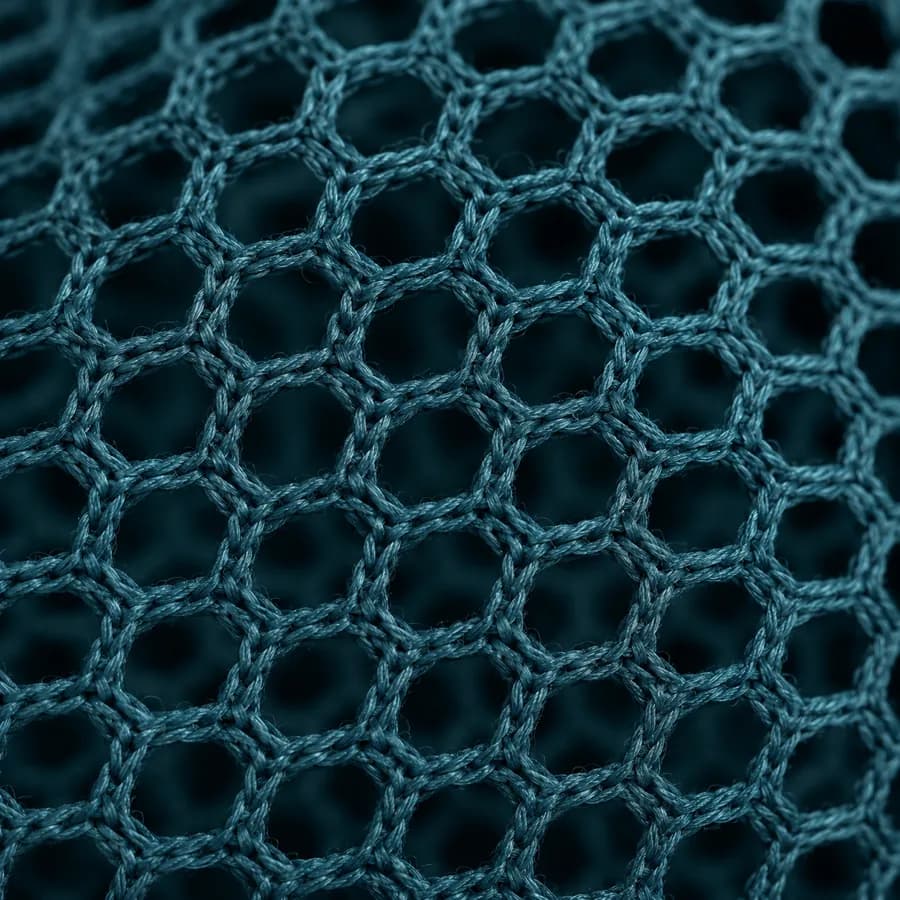
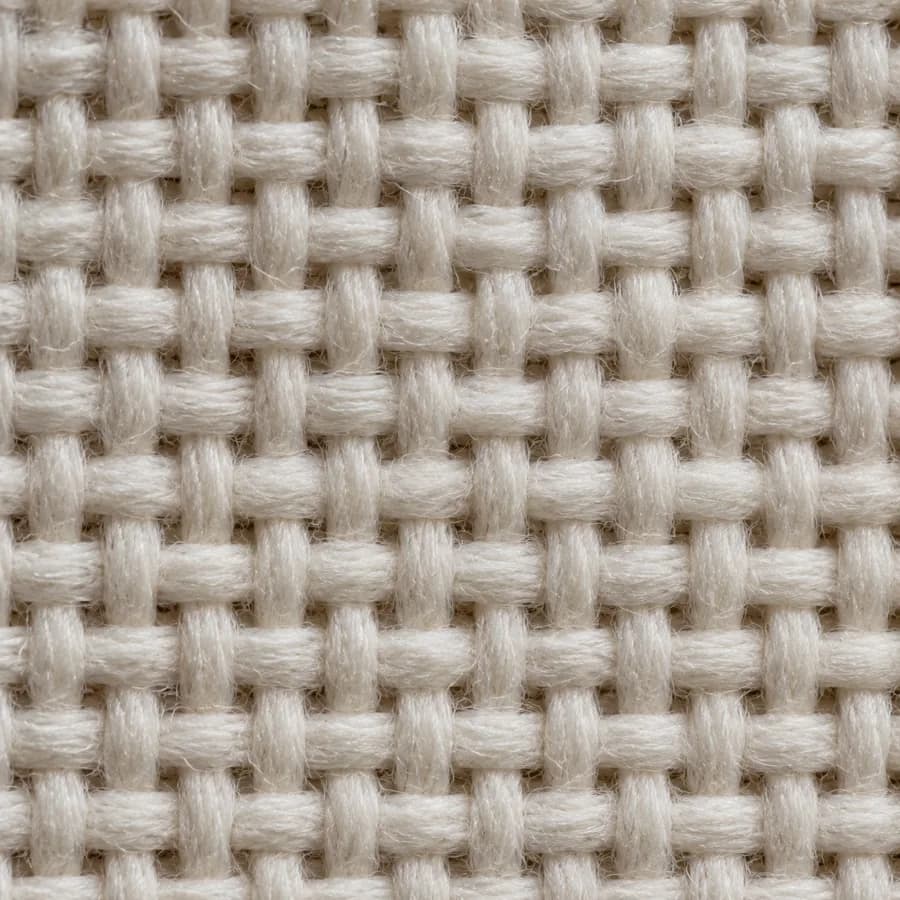
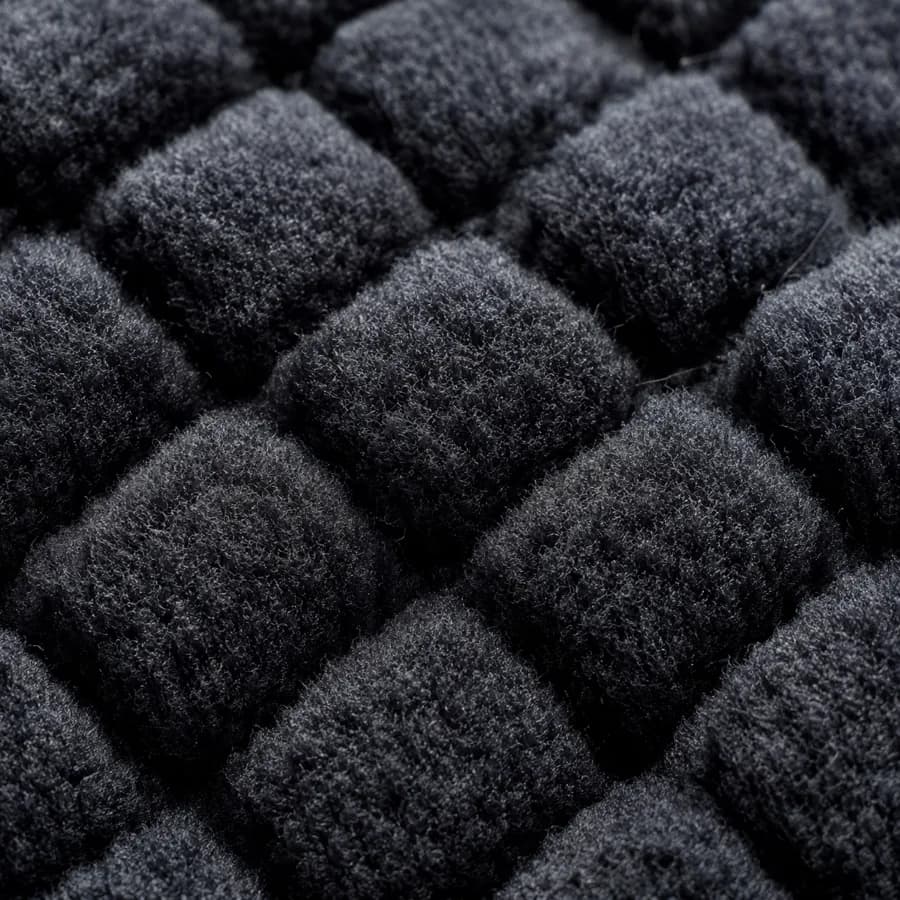
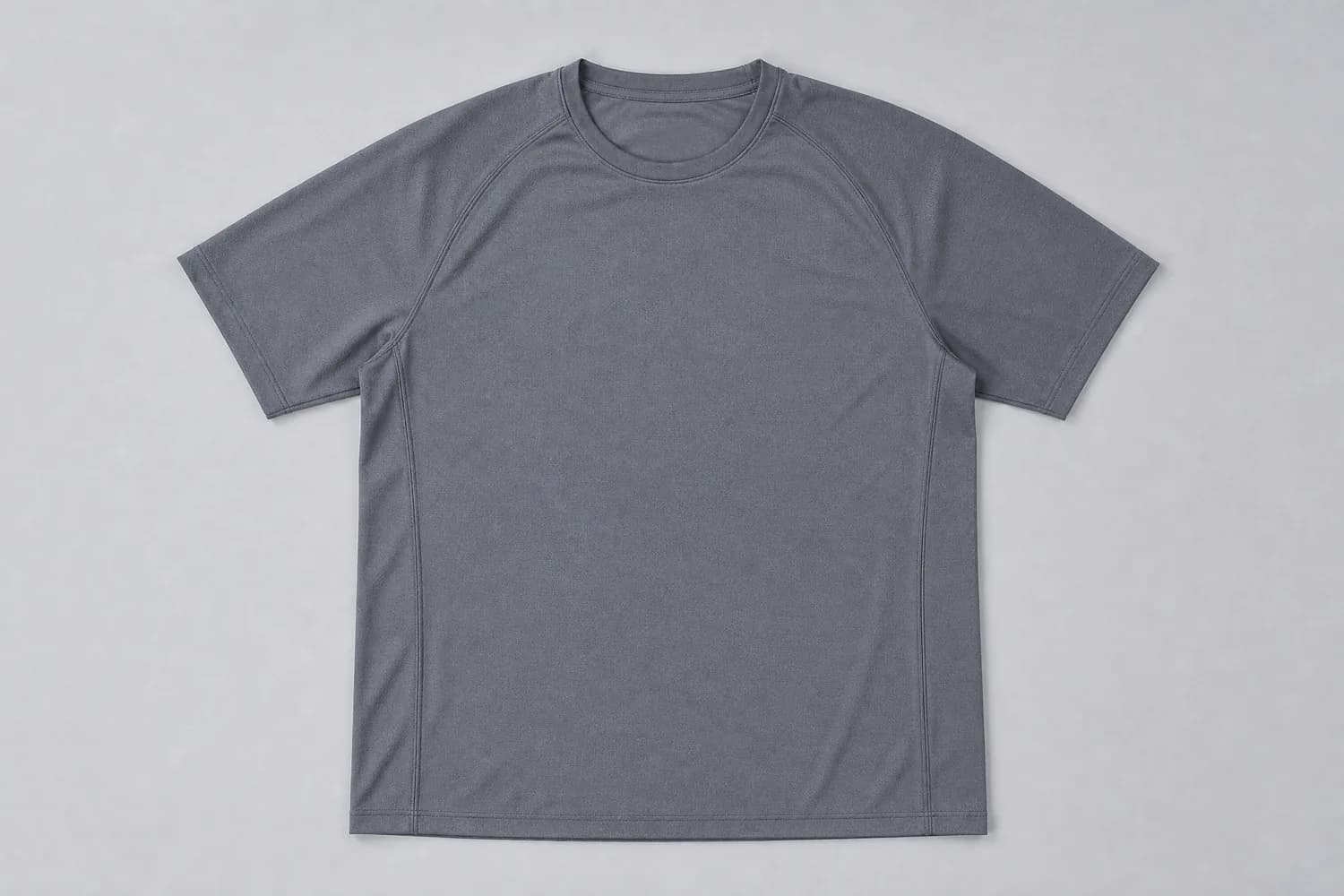
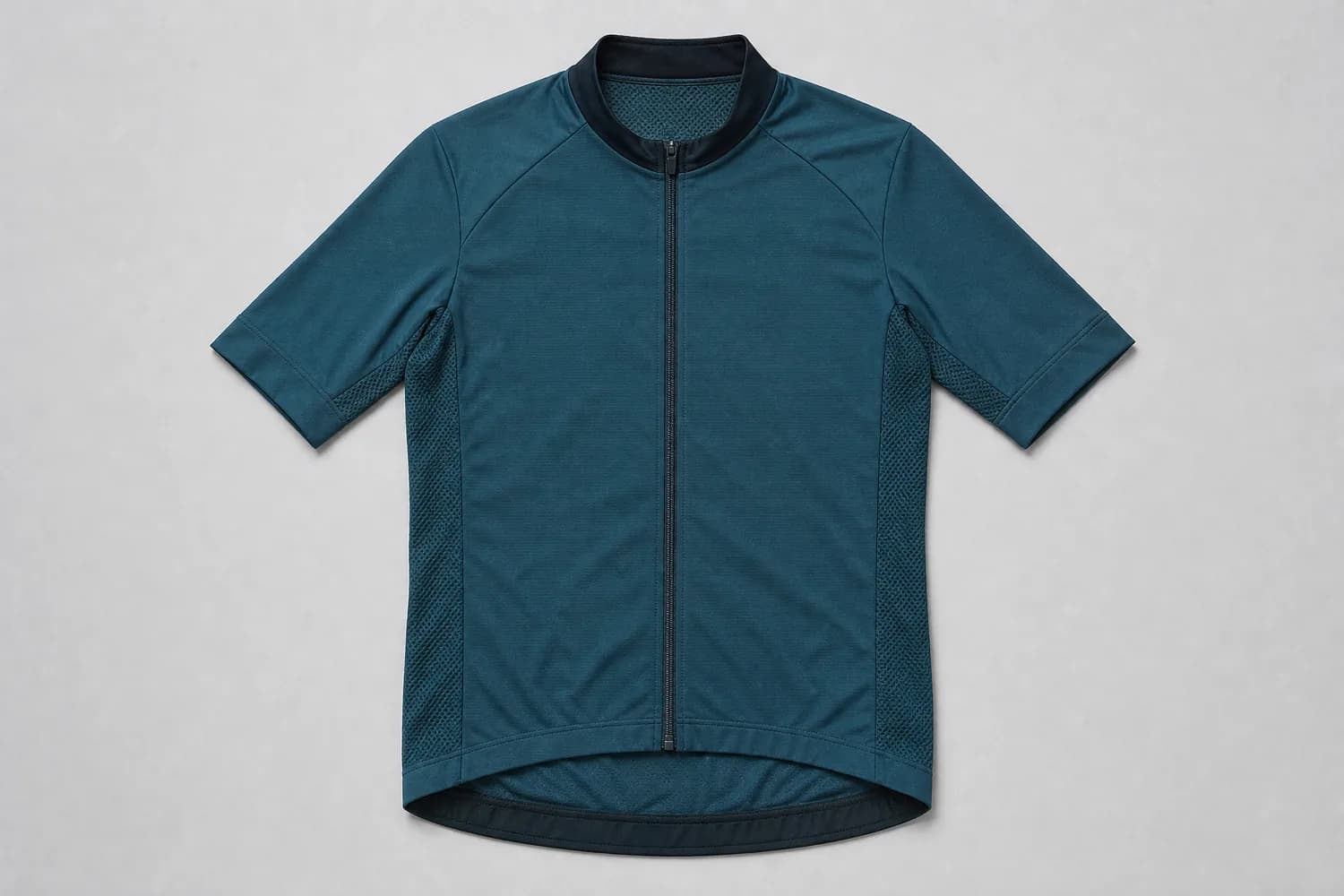
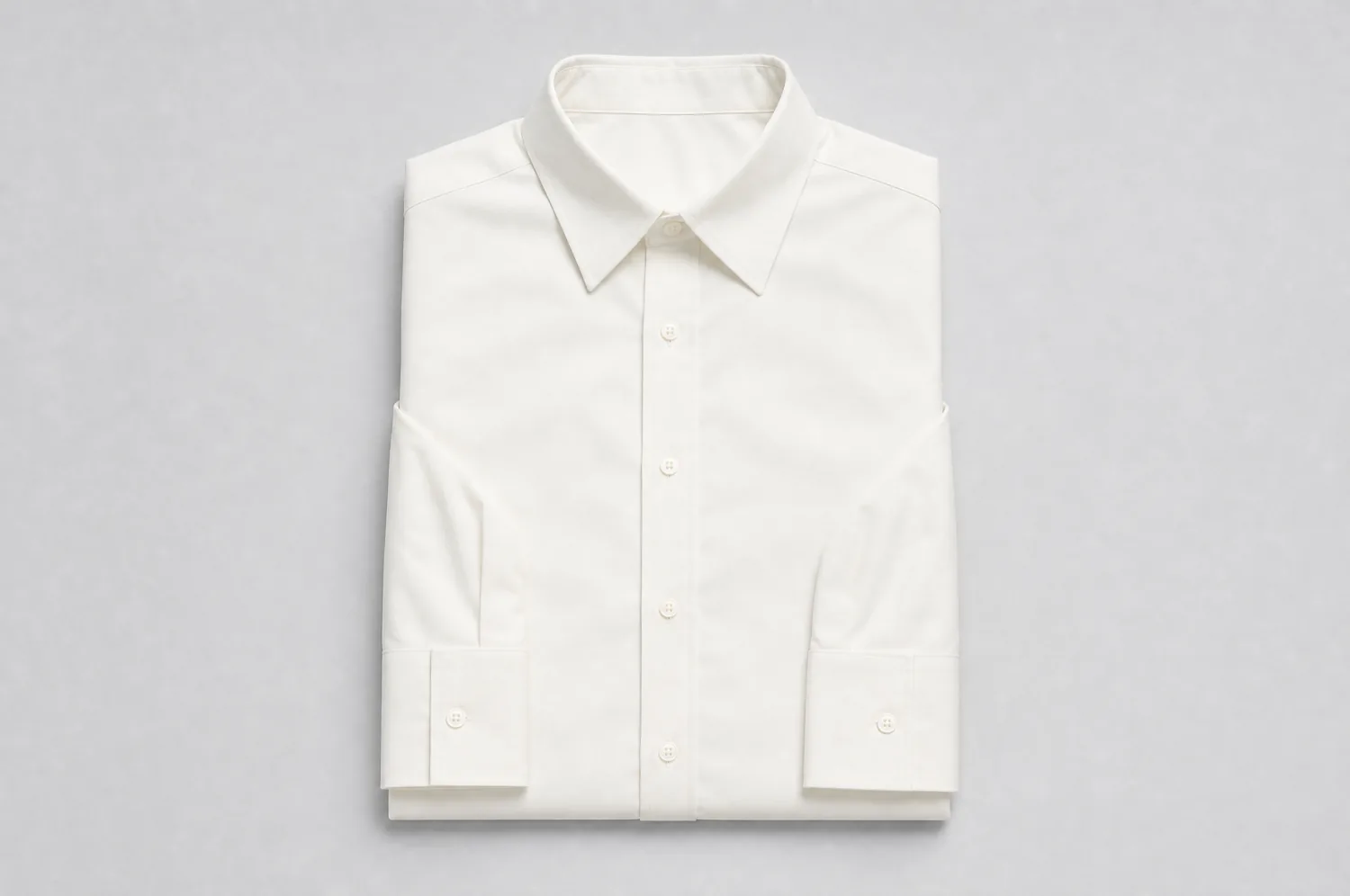
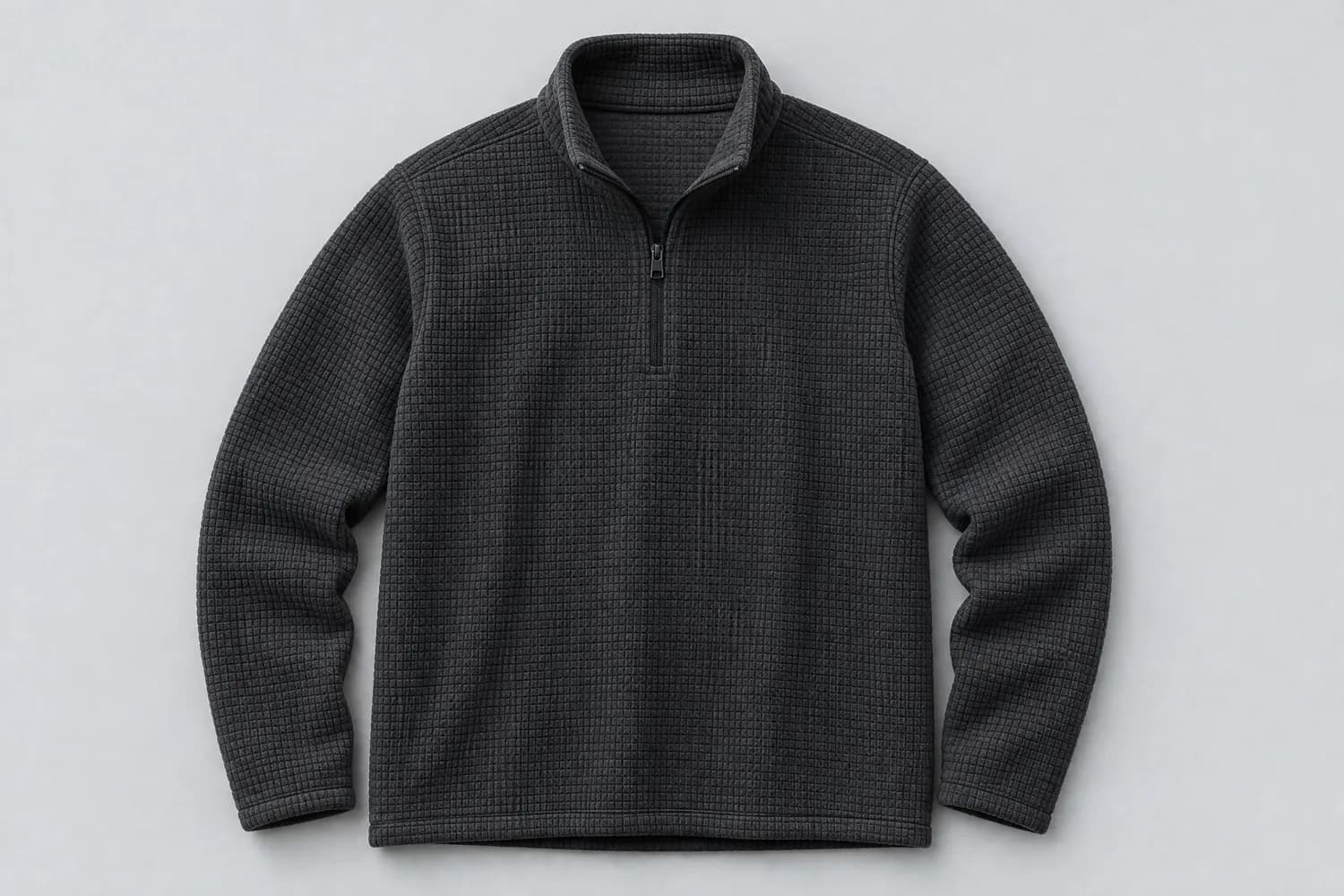
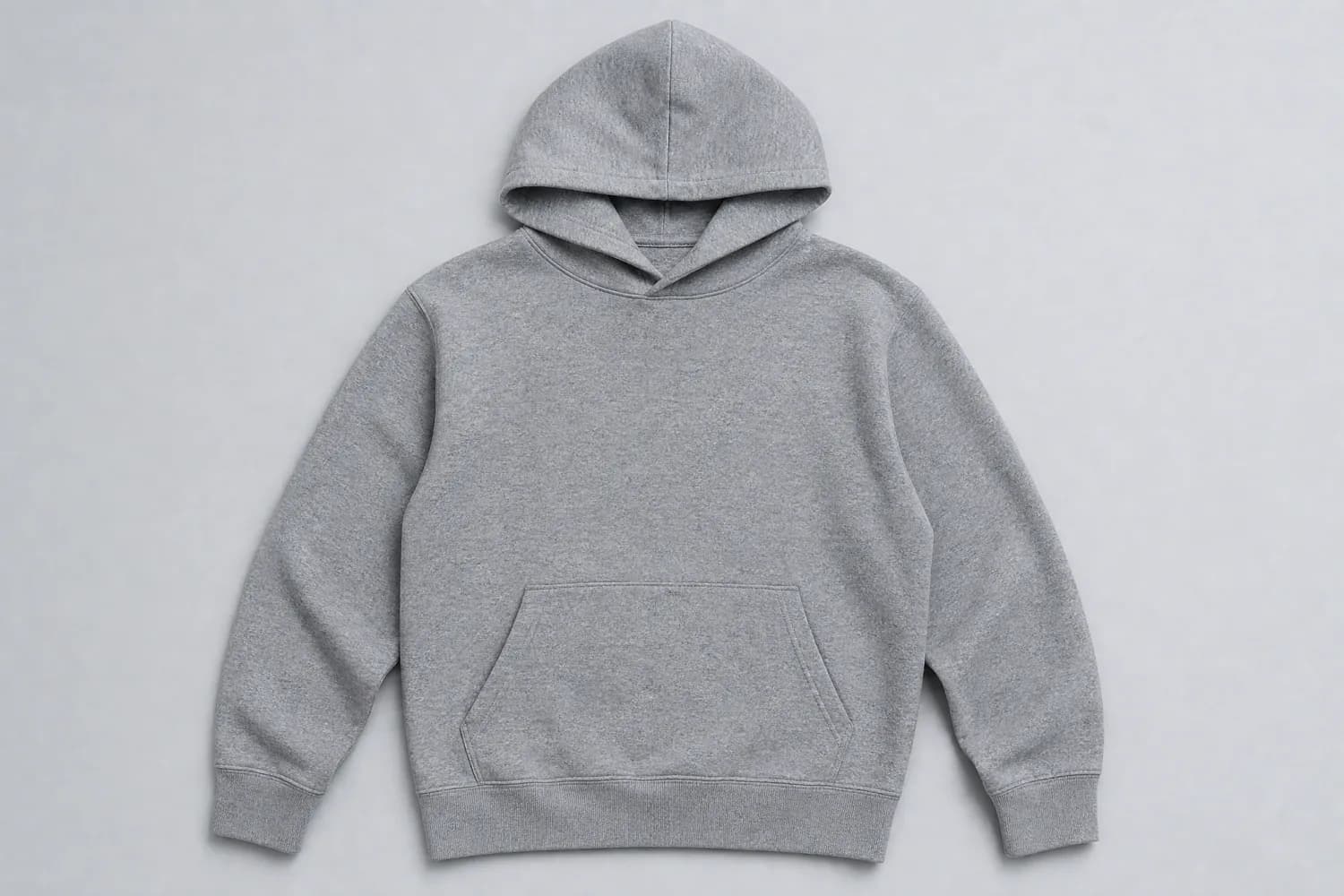
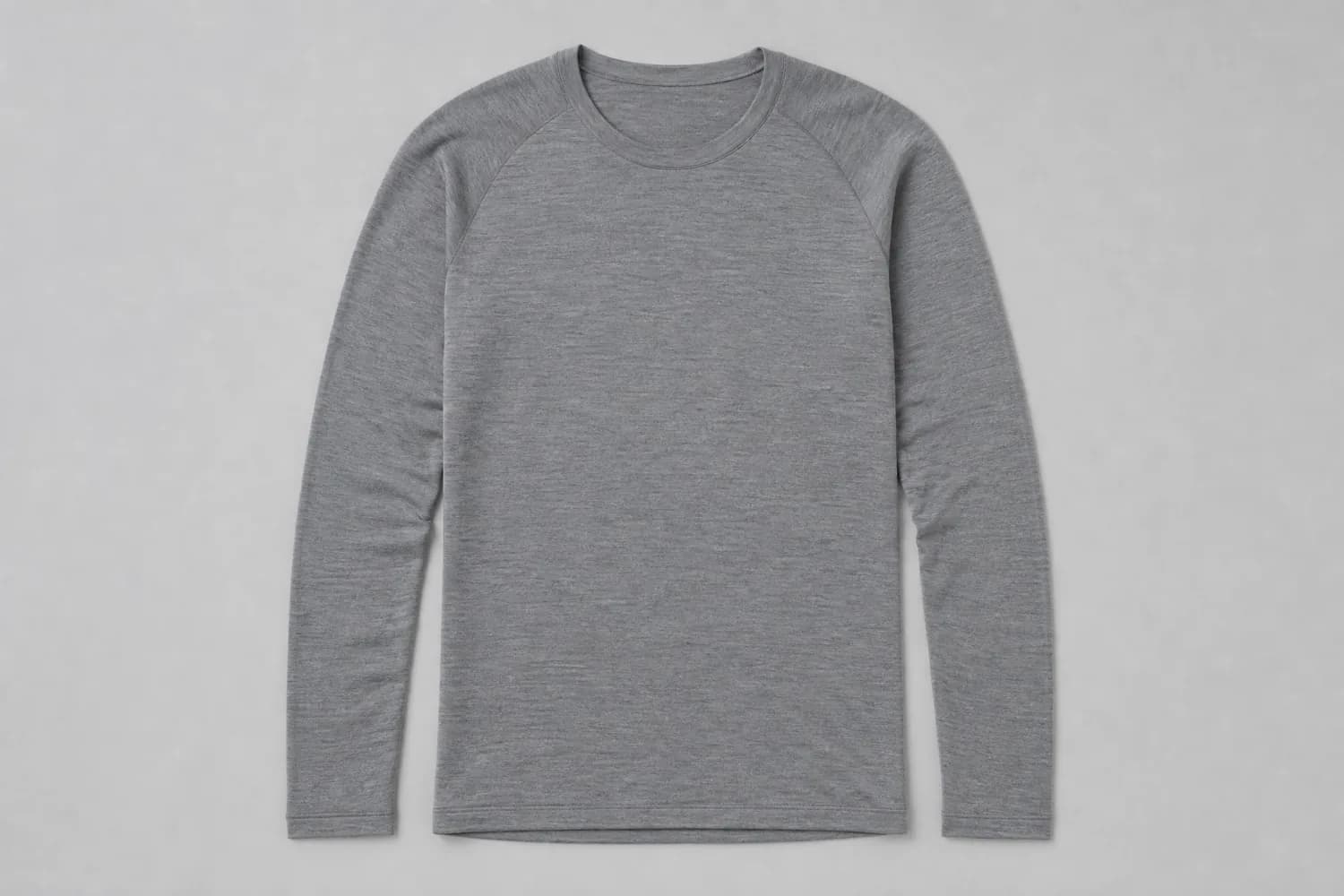
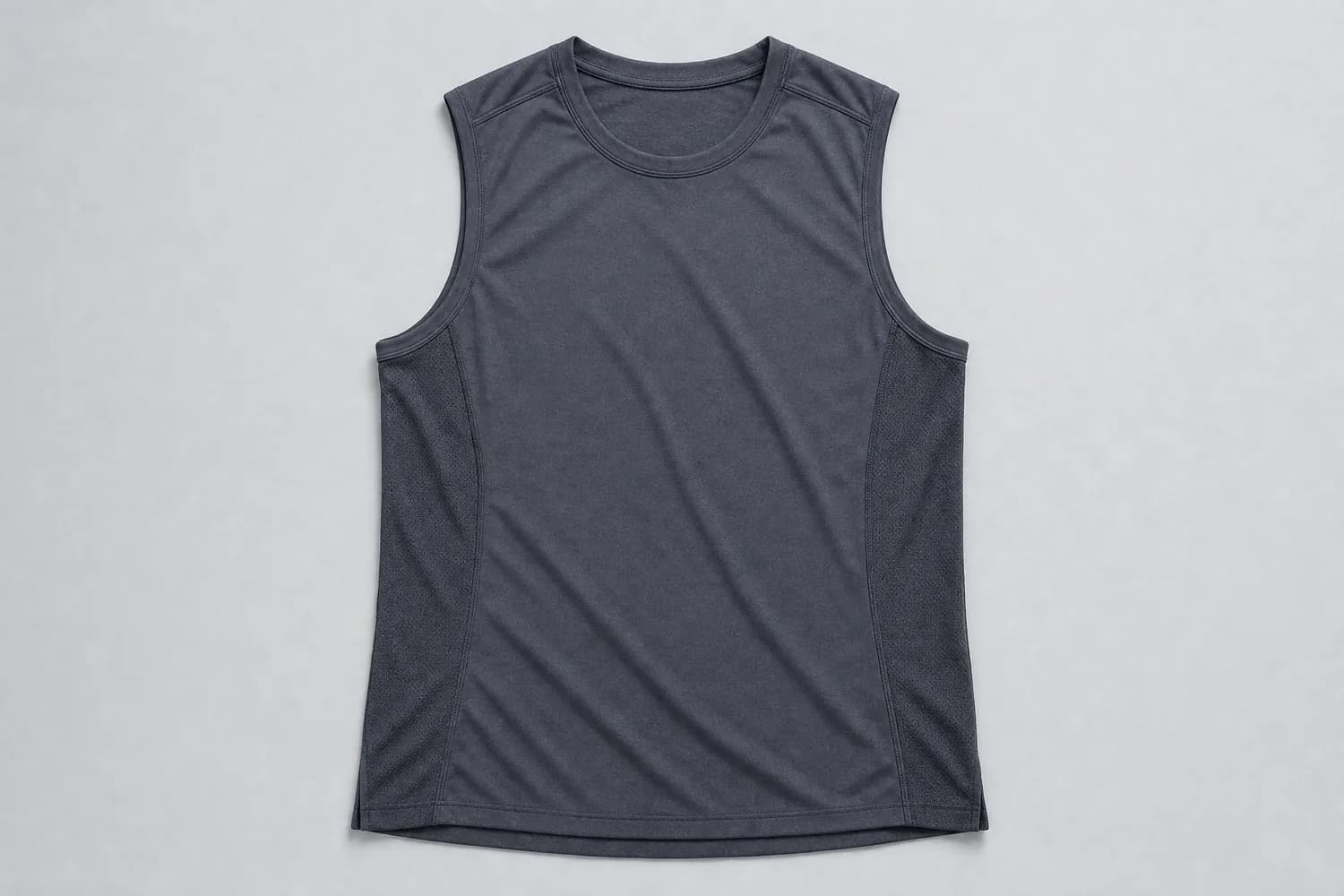
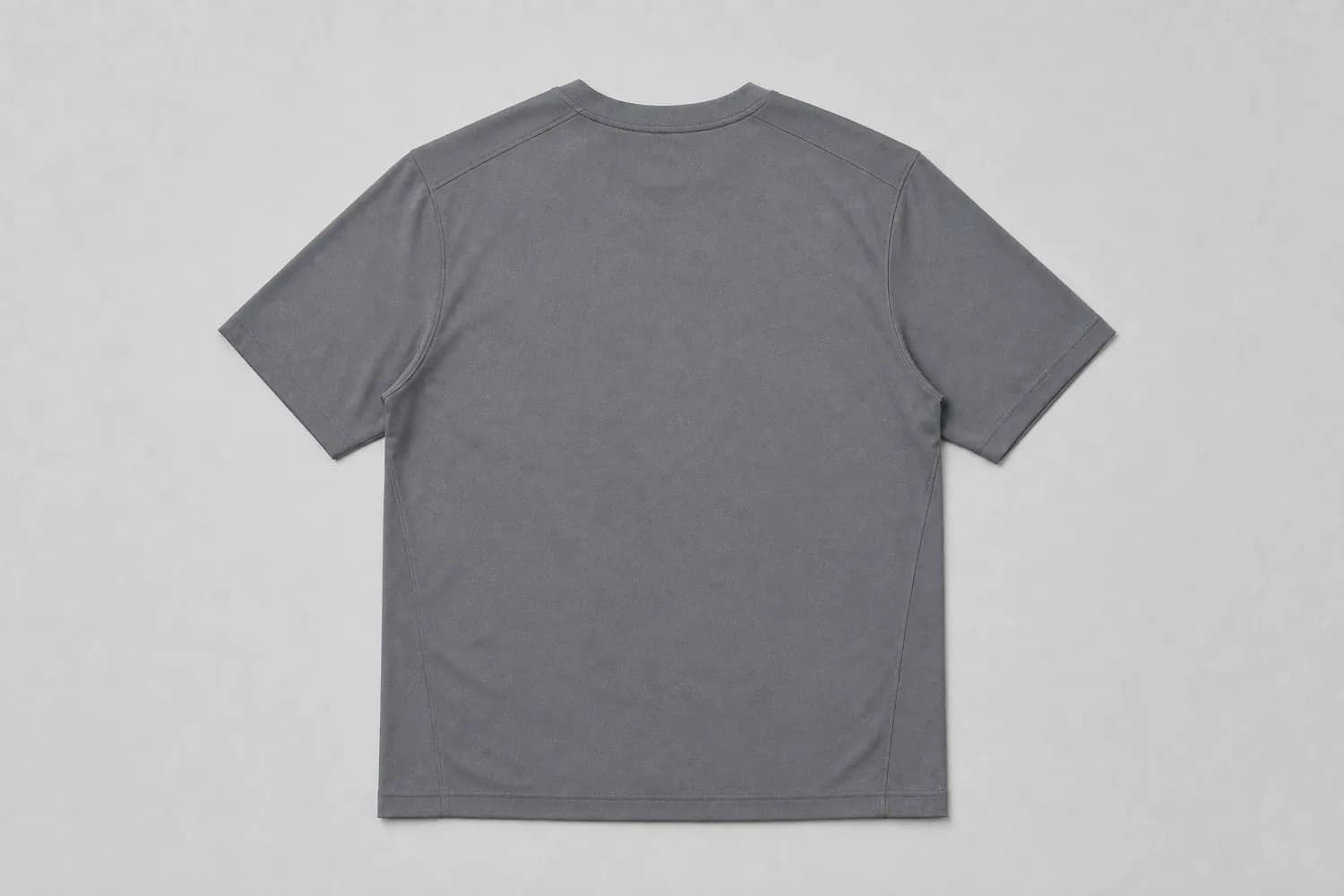
Garment types the reader is calibrated for
05 — The process, as a process
What you actually want to know is which minute you can put it back on, and that only exists between the two frames. The video shows the moisture edge receding with a time scale drawn over it in the browser. Garment laid flat, no person, no audio.
How it is produced
06 — What costs what
On the free tier you get the zone map and the stage cards, watermarked. That tells you where it gets wet. What it does not give you is the thing you are actually deciding — whether you can ride in and walk straight into the meeting. That answer lives in the process, and the process is something you cannot film for yourself.
See where it gets wet.
$0
No card, no expiry
50 credits / month
See what happens after you stop.
$14/month
Cancel any time, effective at period end
500 credits / month
For a wardrobe, not a garment.
$42/month
Cancel any time, effective at period end
2000 credits / month
07 — Questions we get asked
No. Every stage on this site is a range, and it is a range under the conditions you described — not a schedule and not a guarantee.
A drying window moves with things this site has no access to: how much you personally sweat, the humidity of the room you walk into, how much air is moving around the garment, and how thick the fabric actually is at the point that got wet. Two people wearing the same shirt after the same ride can land at opposite ends of the same range.
That is why you will never see a single number here, and never a phrase like "dry in 20 minutes" or "leaves no mark". The range is the honest form of the answer.
This site does not answer that question, and it is not built to. Sweatline describes how a garment behaves. It makes no assessment of any person and provides no health, fitness or medical advice.
If you are seeing sweating that is unusual for you, sweating at night, or sweating on one side of the body only, please speak to a doctor rather than a clothing tool.
If a description you enter points at a health question, the analysis stops before it starts: no zone map is produced and no allowance is used.
Descriptions of what you are doing and where you are going can carry hints about your routine, your workplace and your day. We treat them accordingly.
Your inputs and uploads are never used to train models — not ours, not a third party's. They are processed to produce the reading you asked for and nothing else.
Inputs and generated outputs are retained for 30 days so you can come back to a reading, then deleted. You can delete anything sooner from inside the tool, and you can request deletion of everything at any time by writing to support.
Details, legal bases and the full retention table are in the Datenschutzerklärung.
The readings are model-generated estimates built from what you wrote and, if you upload one, from a flat-lay photo of the garment. They are an aid to your own judgement, not a measurement and not an authoritative statement about a specific product.
Outputs can be wrong or incomplete. Check anything that matters before you rely on it. The service must not be used for medical, legal, financial, safety, employment, credit, housing or judicial decisions.
Everything the site cannot know is listed with every reading, deliberately, rather than hidden in a disclaimer.
No. Zone maps and drying videos always show a garment laid flat. No body, no mannequin, no person.
Uploads are limited to flat-lay photos of a garment for the same reason — a flat-lay is enough to read the fabric, and it keeps the whole product out of the territory of judging bodies. Photos that appear to show a person being worn in are rejected at upload.
You can cancel at any time from Subscription inside the tool. Cancellation takes effect at the end of the paid period; access and the allowance stay available until then, and no further charge is taken.
Monthly allowances reset at the start of each period and do not carry over. There are no credit packs, no top-ups and no stored value — the allowance is a usage counter, not money, and it cannot be redeemed or transferred.
If you need more inside a period, the only route is a higher tier. If you need less, downgrade and it applies from the next period.
As a consumer you have a 14-day right of withdrawal on a digital-services contract. At checkout you are asked for two separate declarations: that we may begin the service immediately, and that you understand your right of withdrawal expires once the service has been fully provided within that period.
Both boxes start unchecked and both are verified again on the server. If either is missing, no contract is concluded and your right of withdrawal continues to run for the full 14 days.
Both declarations are repeated in the order confirmation email. The full text and the withdrawal form are on the Widerrufsrecht page.
The service is offered to people aged 18 and over. Concluding a paid contract requires full legal capacity.
Accounts are not directed at children and we do not knowingly process the data of minors. If you believe a minor has created an account, write to support and it will be removed.
A chat reading costs 1. Reading the fabric from an uploaded flat-lay costs 2. A zone map with drying-stage cards costs 5, and you can re-run it as often as you like while you adjust the description. A drying-process video costs 50.
The zone map and stage cards must be finalised before a video can be produced — the video is generated from the map, so there is no path that skips it.
One line in, a zone map and a drying process out. Free tier, no card, and the readings you already made in the hero were free too.